Earlier this month, I had the fortune to attend the Amsterdam Rare Books and Maps Fair 2019. As I meandered down the maze of book sellers, I suddenly did a double take.
I had spotted a 1588 copy of “Malleus Maleficarum’.
My heart skipped a beat. My mind flashed back to a class I had taken two years earlier, entitled ‘Popular Religion, Women, and Witchcraft, in Early Modern Europe’. We had studied this book. It was incredibly important- one of the first witch hunting manuals of the Reformation, written by legend Heinrich Kramer. Literally called ‘The Hammer of the Witches’, I flicked through this vellum-bound copy with wideset eyes. The exhibitor threw me curious glances, as my eyes would light up and I would squeak “Look, this chapter is on exorcisms! Ooh, and this one is on animals! Did you know that animals being present near witches was a very common myth, and that ‘familiars’ were meant to be evidence for witchcraft? And that the last executing of a witch in the UK was in 1727, when an old lady was accused of turning her daughter into a pony? And…”
I could hardly contain my excitement. In my hands was a literal witch hunting manual. Somebody had used this- it was well-thumbed- and it had had an impact on history. Who knows who used this ‘Malleus Maleficarum’? For what purpose? Was a previous owner responsible for any part of the witch craze of Early Modern Europe?
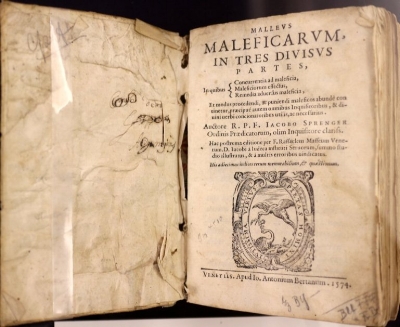
The poor book owner stared at me, perplexed. He knew that the book was valuable- it was on the shelf at €14,500- and yet I seemed to know far more off the top of my head about witchcraft than he did.
This inspired a quest: to seek out witchy books.
This blog is a wee taster of which books were monumental in terms of the witchcraft world. Not just demons and sorcerers, but devils, nudity, and a LOT of propaganda..
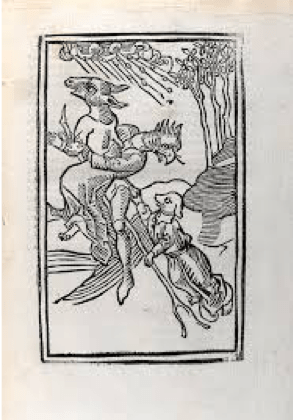
Ulricus’ book De Lamiis was earthshattering. It was the first printed work to depict a flying witch, and there are many woodcuts showing witches as women, the sabbath meetings they held, and diabolical lust.
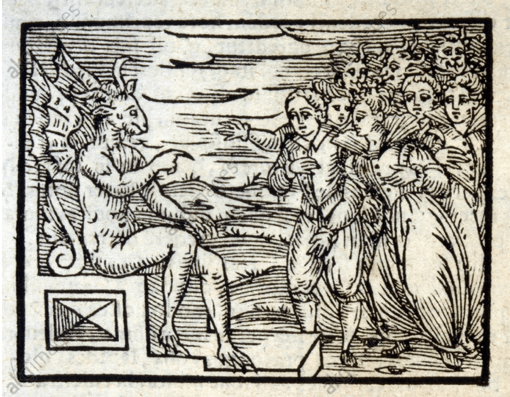
Compendium Maleficarum is a witch-hunter’s manual, chock full of woodcuts “showing the iniquitous and execrable operations of the witches against the human race” and how to fight against them.
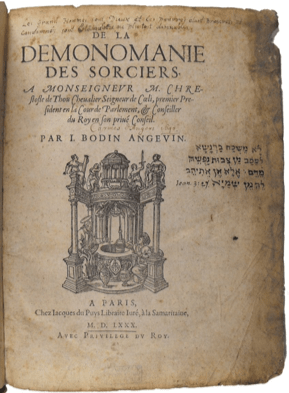
In De la Demonomanie, Jean Bodin believed that witchcraft was the practice of, quite literally, making a deal with the Devil. He didn’t help legal matters when it came to torturing women for information, as Bodin believed that rumours concerning sorcerers were almost always true.
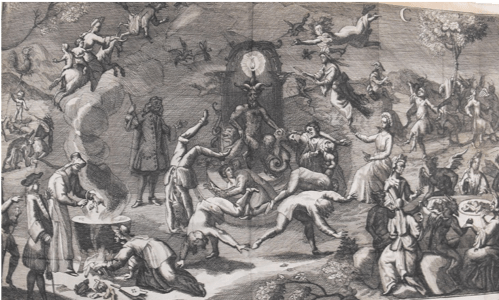
‘Monsieur Oufle’ was a joke figure of L’Histoire des Imaginations, someone who read too many books on magic and believed that he was a werewolf. Whilst this engraving looks dramatic, it’s really all just a satire. For example, the Devil is sitting on the throne instead of God. Hence why the dancers around him are upside-down- it’s an inversion of the proper Christian scene.
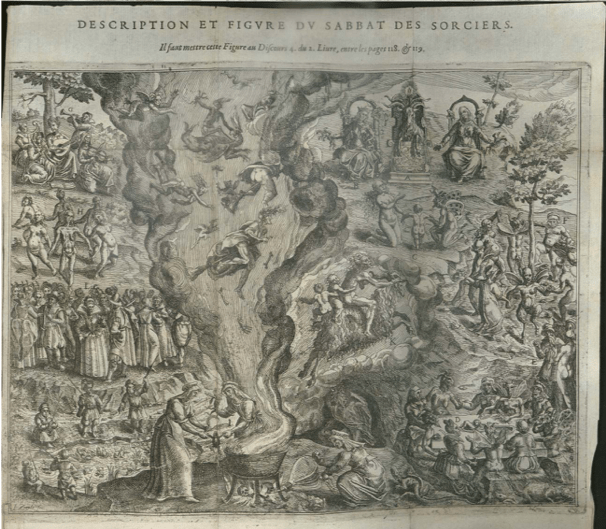
Sent by Henry IV of France to investigate witchcraft in Southwest France, Pierre de Lancre concluded in this Tableau de L’Inconstance that most of the 30,000 inhabitants were untouched by sorcery.
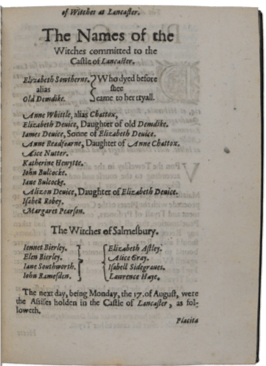
The Trial of the Pendle Forest witches of Lancashire in 1612 was the largest mass trial of suspected witches in history. The Wonderfull Discouerie of Witches tells us that of the eleven who were charged (nine women and two men), ten were executed.
![Image result for A most certain, strange and true discovery of a witch. Being taken by some of the Parliament forces, as she was standing on a small planck board and sayling on it over the river of Newbury ... [London], John Hammond, 1643; quarto ("](https://thefairyantiquarian.blog/wp-content/uploads/2019/10/witch.png?w=285)
A beautiful pamphlet of A Most Certain, Strange and True Discovery showing how witches were portrayed in propaganda and news articles. This was a popular pamphlet image in the 17th century, so gave an idea of ‘what to look out for’ when witch spotting.
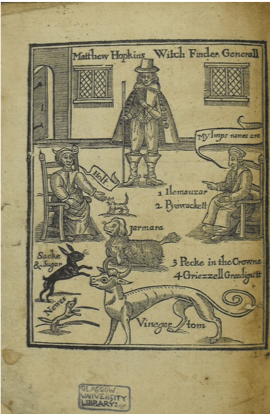
Paralleled only by Kramer, Matthew Hopkins was personally responsible for the execution of over 300 witches in England, in just two years. Notice the animals meant to be associated with witches in his Discovery of Witches: not just newts, but domestic animals like cats and dogs.
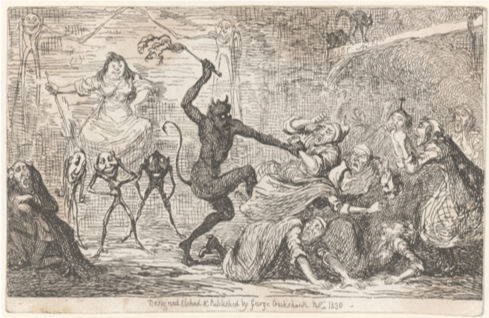
A beloved Scottish poet, Scott could not resist the lure of witchcraft and the fascinating figure of the Devil in his Letters on Demonology.
Whilst there are plenty more books on witchcraft out there, these are what I take to be the main players of the show. Witchcraft didn’t die out in Western Europe until well after the 1750’s, and even later in Eastern Europe. Most ‘witches’ accused were women, and the witch persecutions on Early Modern Europe leave an ugly yet fascinating scar across the tapestry of our history.
 The Fairy Antiquarian
I’ve got quite a few of those on my shelf, but the Hopkins one is the only one I’ve managed to read. They can be pretty depressing.
LikeLike
I envy your shelf! Hopkins was definitely one to watch, and a persuasive orator. Depressing perhaps, but fascinating to us now…
LikeLike